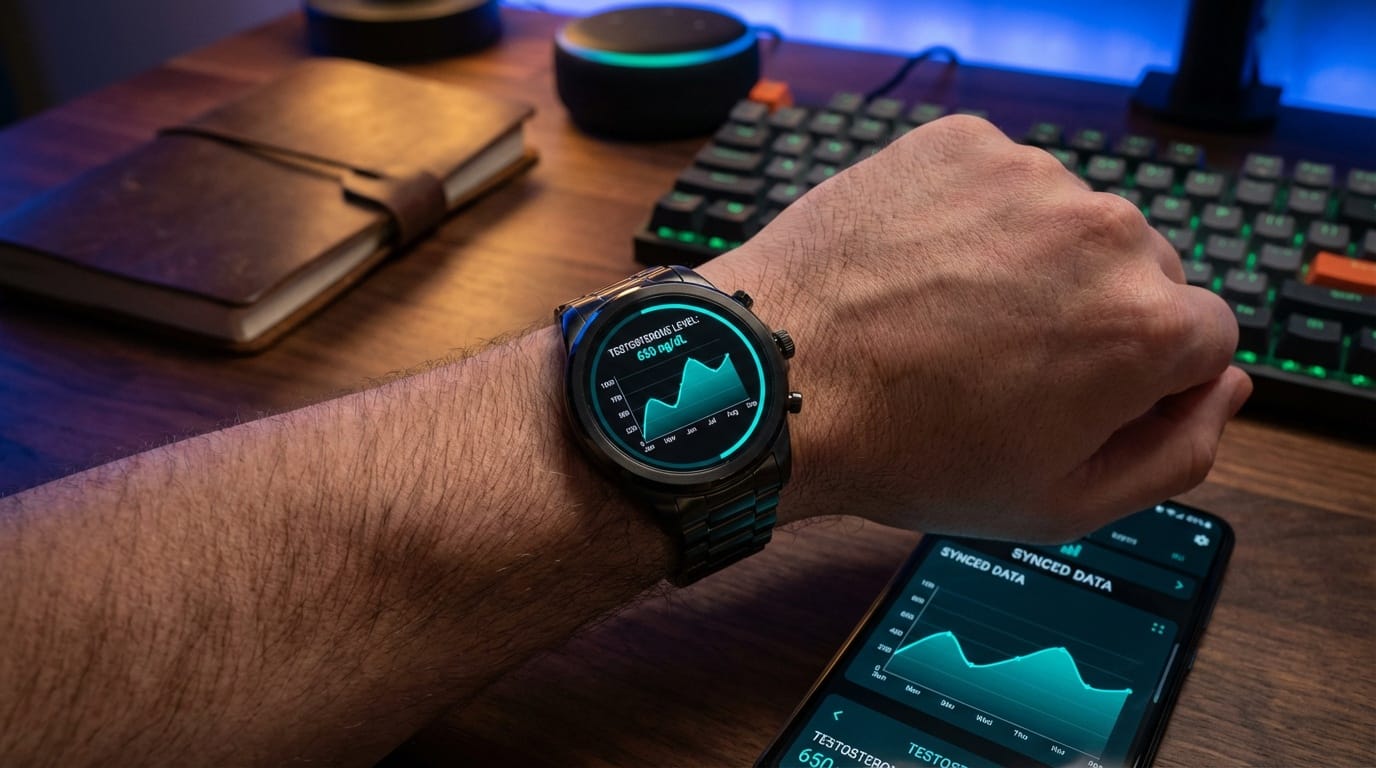
Testosterone Tracker Android Guide: How to Monitor Your Hormones Safely on Your Phone
Between 2020 and 2022, testosterone-related mobile health app releases increased by 600%, yet most men still rely on scattered notes and lab PDFs to track one of their most important hormones. We built this guide to show how an Android testosterone tracker can bring your labs, symptoms, workouts, and TRT protocol into one clear picture. We will also walk through how our own Himcules ecosystem thinks about private, local-first health tracking to keep your hormone data under your control. If you are on TRT, suspect low testosterone, or simply want structured tracking, this article will help you decide how to use Android tools wisely.
Key Takeaways
| Question | Answer |
|---|---|
| What is a testosterone tracker on Android? | A testosterone tracker Android app lets you log blood tests, TRT doses, symptoms, libido, mood, sleep, and training data in one place so you can see patterns over time. |
| Why does data privacy matter for hormone tracking? | Hormone data is deeply personal. At Himcules we emphasize a local‑first architecture for health tracking data, as described in our privacy policy, so you stay in control of your information. |
| Can Android testosterone trackers help with TRT? | Yes. A well‑designed tracker supports TRT by organizing labs, doses, side effects, and lifestyle factors so you and your clinician can make data‑driven dose changes. |
| How do I choose a reliable testosterone tracker app? | Look for transparent medical disclaimers, clear terms of service like ours at Himcules terms, evidence‑based education, and strong privacy controls. |
| Is an Android tracker a substitute for lab tests? | No. An app organizes your information but does not replace blood work, physician visits, or medical advice. Our contact page highlights this with a clear medical disclaimer. |
| Who is behind TRT‑focused tools like Himcules? | Himcules is an independent TRT‑focused publication founded by Moe Fayed, introduced on our about page, with a mission to make hormone tracking clearer and more honest. |
1. What a Testosterone Tracker Android App Should Actually Do
When people search for a “testosterone tracker Android” app, they usually want more than a basic note‑taking tool. They want a structured way to connect blood test numbers with how they feel, how they train, and what they are injecting or taking. As TRT content grows online, structure matters more than ever.
From our perspective, a proper testosterone tracking app on Android should cover five pillars: labs, medication, symptoms, lifestyle, and education. Each of these feeds into the bigger question you and your clinician care about: how your protocol and daily choices affect your hormone health and quality of life.
- Lab tracking: Total T, free T, SHBG, E2, hematocrit, etc.
- Protocol tracking: Dose, compound (cypionate, enanthate, gels), schedule.
- Symptom logs: Libido, mood, energy, sleep quality, cognitive performance.
- Lifestyle: Training sessions, alcohol, big stressors, diet notes.
- Education: Plain‑language explanations, not social‑media myths.
2. Why Android Is Becoming the Home for Testosterone Tracking
Android is the dominant mobile platform in many regions, and it pairs naturally with a wide range of wearables and at‑home testing services. That makes it an obvious home base for testosterone tracking, especially for men who value flexibility and device choice over a single closed ecosystem. We see this demand clearly in our own audience questions and feedback.
At the same time, the Android ecosystem can feel crowded and uneven in quality. Some hormone‑related apps are thoughtfully built; others are repackaged fitness logbooks with hormone buzzwords tacked on. Our job as a publisher is to help you spot the difference and understand what features truly matter for testosterone tracking.
- Broader choice of phones at different price points.
- Strong support for cross‑platform wearables like Fitbit, Garmin, and WHOOP.
- Global reach, which is critical as TRT use expands beyond North America.
3. Core Features to Look for in a Testosterone Tracker Android App
Not every health app labelled “testosterone” deserves space on your phone. We suggest you evaluate Android testosterone trackers against a simple checklist so you can avoid frustration and misinformation. A well‑built tracker respects both your time and your privacy.
Essential tracking and visualization
At minimum, a serious testosterone tracker on Android should let you log lab values with dates and reference ranges. It should also graph trends over time so you can see whether a protocol change actually moved your numbers or improved how you feel. Without charts and side‑by‑side comparisons, “tracking” becomes little more than data storage.
Medical disclaimers and data handling
Any app dealing with hormones needs a clear medical disclaimer and transparent privacy policy. At Himcules, we lead with an “IMPORTANT MEDICAL DISCLAIMER” on our contact page because we never want readers to confuse our tools or content with personalized medical advice. We encourage you to look for the same level of clarity in any Android app you download.
| Feature | Why It Matters for Testosterone Tracking |
|---|---|
| Lab input & reference ranges | Lets you compare numbers across different labs and timelines. |
| Dose & schedule logging | Helps relate protocol changes to symptom changes. |
| Symptom journaling | Captures how you actually feel, not just lab numbers. |
| Graphs & correlations | Reveals trends and possible triggers at a glance. |
4. Privacy and Local‑First Data: Why It Matters for Testosterone Tracking
Hormone data is not just another fitness metric; it reveals details about your sexual health, mental health, and long‑term medical risk. That is why we built Himcules around a “local‑first” mindset, described in our privacy policy, where your health tracking data lives on your device by default. For a testosterone tracker Android app, this approach reduces exposure if a remote server is ever breached.
A local‑first design also gives you flexibility. You can decide what to back up, what to sync across devices, and what stays only on your phone. When you evaluate other Android testosterone tracker apps, look for clear statements about where data is stored, whether it is sold, and how you can delete it.
We believe that tracking testosterone should not require trading away your privacy. Data should work for you, not for advertisers.
5. Using a Testosterone Tracker Android App Alongside TRT (Testosterone Replacement Therapy)
If you are on TRT, a testosterone tracker Android app becomes a practical extension of your medical file. Instead of pulling old emails and PDFs before every appointment, you can open one dashboard showing the last six months of labs, injection dates, and symptom scores. This makes your visits more efficient and your discussions more specific.
We always stress that an app is a companion, not a prescriber. TRT decisions belong to you and your clinician. The role of an Android tracker is to make the relevant information impossible to miss: when hematocrit quietly drifts up, when estradiol runs out of range, or when libido collapses after a dose change.
- Log injection times and sites to check for consistency.
- Rate libido, mood, and energy daily or weekly.
- Capture notes about side effects like acne, edema, or sleep apnea changes.
6. Wearables, Wellness Scores, and Testosterone Tracking on Android
The newest generation of testosterone tracker Android tools increasingly pull in data from wearables. For example, TestoTrack reports a 0–100 testosterone wellness score derived from sleep, HRV, activity, and recovery data, and it connects to devices like Fitbit, Garmin, and WHOOP. While the underlying algorithms vary, the idea is the same: estimate how supportive your current routine is for hormone health.
SynergenX has also launched an Android hormone‑health app aimed at TRT and HRT patients, and it reflects the same trend: moving from isolated lab values to continuous context from daily life. For men who already wear an activity tracker, this can be a natural fit, but we still encourage you to understand what each score actually represents and not confuse correlation with causation.
| Data Source | How It Relates to Testosterone |
|---|---|
| Sleep duration & quality | Poor sleep is linked to lower testosterone and worse recovery. |
| Heart rate variability (HRV) | Acts as a proxy for stress and recovery capacity. |
| Training load | Very high or very low loads can both affect hormones. |
7. At‑Home Testing, Hormone Sensors, and the Future of Android Tracking
Beyond traditional blood draws, new tools such as Hormometer—a smartphone‑based saliva test platform announced for CES 2025—signal where hormone tracking is headed. While Hormometer currently focuses on hormones like cortisol and progesterone, the underlying idea is clear: more hormones, including testosterone, will eventually be testable and interpretable directly through your phone. Any testosterone tracker Android app that survives long term will need to integrate with this shift.
Market data already show that 55% of men under 35 link testosterone monitoring to gym performance, 62% favor remote testing, and 78% of millennials prefer app‑connected test kits. As expectations move in that direction, our role is to help you prioritize reliability and medical supervision over novelty. We expect tighter links between Android apps, at‑home test providers, and clinical services in the coming years.
8. How to Avoid Misinformation When Using Testosterone Tracker Android Apps
The growth of testosterone tracker Android apps runs in parallel with a flood of hormone‑related content on TikTok, YouTube, and Instagram. A 2024 TikTok study on TRT content showed serious misinformation risks, and we see similar patterns inside some apps that blend tracking with aggressive supplement marketing. We built Himcules specifically to push back against that trend with clearer, more cautious writing.
When you test a new Android testosterone tracker, read the educational sections critically. Look for references to clinical guidelines, not just influencer videos. Question any app that promises life‑changing results from a protocol change without mentioning side effects, lab monitoring, or the need for physician oversight.
- Be wary of one‑size‑fits‑all dose “recommendations.”
- Cross‑check claims against independent medical resources.
- Use your tracker as a logbook, not a replacement for medical judgment.
9. Himcules: Our Perspective on TRT Tracking and Android
Himcules began as an independent TRT‑focused publication in December 2025, created by Moe Fayed to serve men who wanted honest, practical guidance about hormone health. While our main site is currently content‑driven, the principles we outline there—local‑first data, clear disclaimers, and community input—directly shape how we think about testosterone tracker Android tools. We design and evaluate everything from the standpoint of a real patient trying to get clarity, not a user chasing biohacking trends.
We invite readers to treat Himcules as a hub for TRT tracking knowledge: tutorials on reading labs, frameworks for logging symptoms, and guidance on discussing your data with clinicians. As our product roadmap evolves, those same values will govern any Android tools we release or recommend for testosterone tracking.
10. Practical Setup Checklist for Your Testosterone Tracker Android App
To get real value from a testosterone tracker Android app, you need a simple setup routine. Many men download an app, log one or two labs, and never return. We recommend you block 30–45 minutes once, set everything up properly, and then only invest a few minutes per day or per week to keep it updated.
- Enter your full hormone history: Add as many past labs as you can find (dates, values, ranges).
- Define your current protocol: Dose, compound, schedule, and any adjunct meds like hCG or anastrozole.
- Choose 3–5 key symptoms: For example, libido, morning erections, mood, energy, gym performance.
- Set reminders: For injections, gel application, and upcoming lab draws.
- Decide your privacy posture: Local‑only, or with encrypted backup/sync if available.
Once this foundation is in place, your Android tracker becomes a living record rather than another forgotten app icon. That record is what helps you and your clinician make more precise, less emotional decisions about your testosterone health.
Track Your TRT Protocol
Stop guessing. Start tracking. Your TRT protocol deserves better than spreadsheets.
Download HimculesRelated Reading:
Conclusion
A testosterone tracker Android app is not a magic fix, but it is one of the most practical tools you can use to understand how your hormones interact with your daily life. Used well, it turns scattered labs and vague memories into a coherent timeline you can review with your clinician. Used carelessly, it can become just another source of notifications and misinformation.
As a TRT‑focused publication, we encourage you to choose Android testosterone tracking tools that respect your privacy, acknowledge medical limits, and help you think more clearly, not less. If you keep those standards in mind, your phone can become a reliable ally in navigating testosterone, TRT, training, and long‑term health.