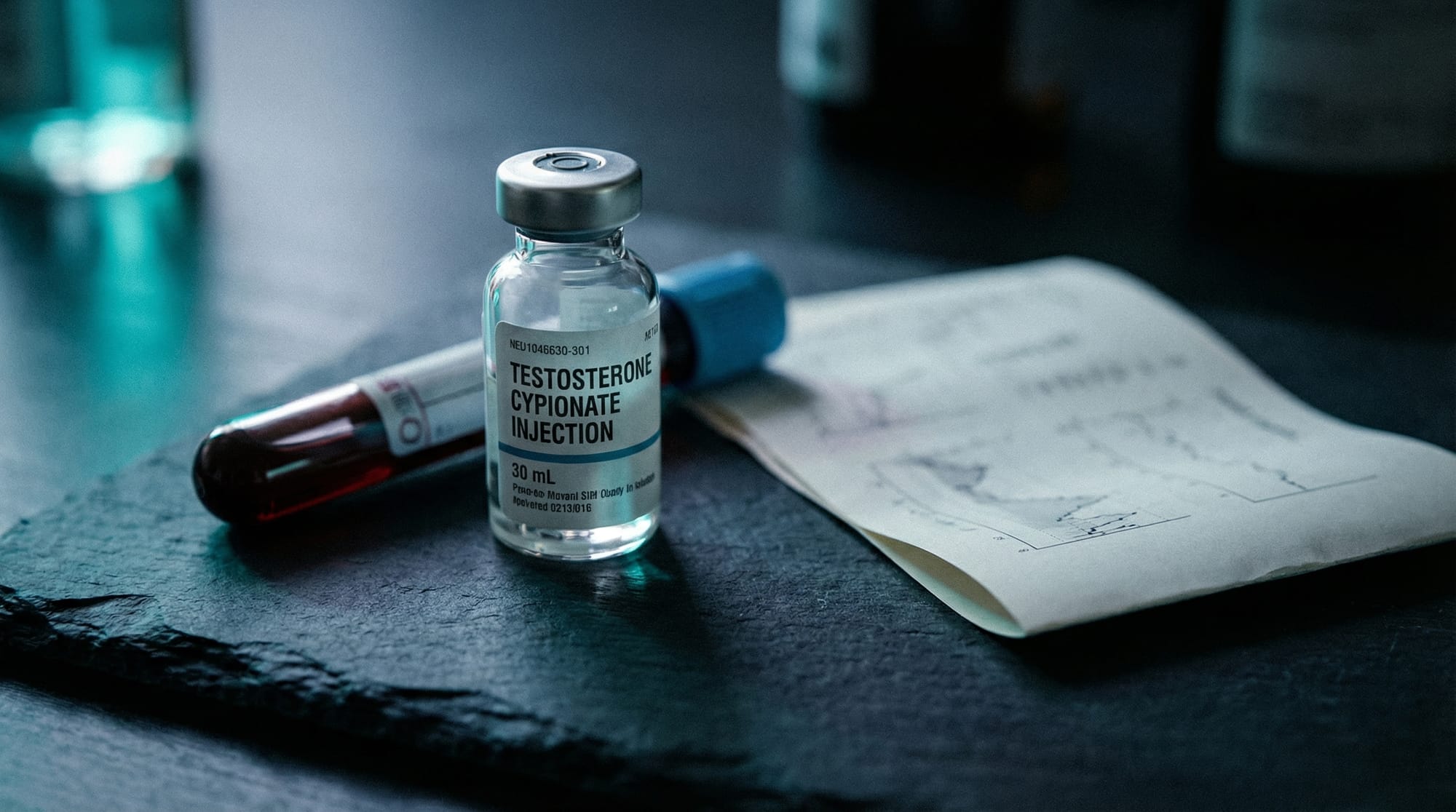
Testosterone replacement therapy (TRT) can cause side effects ranging from mild acne and fluid retention to more serious concerns like elevated red blood cell counts and changes in cardiovascular markers. About 25% of men on TRT report at least one side effect during the first 12 weeks, but most are manageable — and nearly all are trackable with the right lab work and symptom monitoring.
Here’s what the clinical sites won’t tell you: the side effects of TRT aren’t a mystery you just hope to avoid. They follow predictable patterns tied to your dose, your body’s metabolism, and how diligently you monitor your labs. This guide breaks down every common side effect of TRT in males, separates temporary nuisances from long-term concerns, and gives you a practical framework for catching problems early — before they become real issues.
What Are the Most Common Side Effects of TRT?
The most common side effects of TRT include acne, fluid retention, increased red blood cell production (polycythemia), mood fluctuations, and changes in sleep patterns. A 2016 meta-analysis in Medicine found that skin-related side effects like acne and oily skin affected roughly 20% of men on testosterone therapy within the first six months.
Here’s a breakdown of the side effects most men encounter:
Skin Changes
Acne and oily skin are among the earliest side effects of TRT. Testosterone increases sebum production, which can clog pores — especially on your back, shoulders, and face. For most men, this peaks around weeks 4–8 and stabilizes as your body adjusts.
Did You Know? Subcutaneous testosterone injections may cause fewer skin-related side effects than intramuscular shots because they produce more stable hormone levels. If injection-related side effects concern you, it’s worth understanding the differences between subcutaneous and intramuscular injections.
Fluid Retention and Bloating
Testosterone promotes sodium and water retention through its effect on the kidneys. You might notice puffiness in your ankles, hands, or face during the first month. A weight gain of 2–5 pounds from water retention is common and usually temporary. This is not fat gain — it’s fluid, and it typically resolves within 6–8 weeks as your body recalibrates.
Elevated Red Blood Cell Count (Polycythemia)
This is the side effect your doctor should be watching most closely. Testosterone stimulates erythropoiesis — the production of red blood cells. A study published in The Journal of Clinical Endocrinology & Metabolism found that polycythemia occurred in up to 20% of men on intramuscular testosterone, making it the most clinically significant common side effect.
When your hematocrit (the percentage of blood volume occupied by red cells) climbs above 54%, your blood becomes thicker, which increases the risk of clots, stroke, and cardiovascular events. This is why regular blood work every 3–6 months is non-negotiable on TRT — and why you should know how often to check your testosterone levels.
Mood and Sleep Changes
Some men experience mood swings, irritability, or increased anxiety during the first few weeks of TRT. Others report improved mood almost immediately. Sleep can go either way — some men sleep deeper, while others notice mild insomnia or increased snoring. Testosterone can worsen obstructive sleep apnea in men who are predisposed to it, so flag any new snoring or daytime fatigue to your provider.
Testicular Atrophy
When you supply testosterone externally, your brain signals your testes to stop producing it. Over time, this can lead to testicular shrinkage. It’s cosmetic for most men and doesn’t affect the benefits of TRT, but it does impact fertility — which brings us to the next section.
Which TRT Side Effects Are Temporary vs Long-Term?
Most side effects of TRT fall into two categories: early-phase effects that resolve within 8–12 weeks as your body adjusts, and ongoing effects that persist as long as you’re on therapy. Knowing the difference saves you from panicking about acne in week three or ignoring a rising hematocrit at month six.
Temporary Side Effects (Usually Resolve in 8–12 Weeks)
| Side Effect | Typical Onset | Expected Resolution |
|---|---|---|
| Acne / oily skin | Weeks 2–4 | Weeks 8–12 |
| Fluid retention / bloating | Weeks 1–3 | Weeks 6–8 |
| Mood swings / irritability | Weeks 1–4 | Weeks 6–10 |
| Increased libido (can feel excessive) | Weeks 2–3 | Stabilizes by week 8 |
| Injection site soreness | Each injection | Improves with technique |
Long-Term / Ongoing Side Effects
| Side Effect | Onset | Management |
|---|---|---|
| Elevated hematocrit | Months 2–6 | Regular blood work; therapeutic phlebotomy if needed |
| Testicular atrophy | Months 3–12 | HCG co-therapy (discuss with provider) |
| Fertility suppression | Months 1–6 | HCG or FSH if fertility is a priority |
| Hair thinning (DHT-related) | Months 6–24 | DHT blockers; see our deep dive on TRT and hair loss |
| Potential cardiovascular markers | Varies | Lipid panels + hematocrit monitoring |
The key takeaway: temporary side effects are your body adjusting to a new hormonal environment. Long-term side effects are trade-offs that require active monitoring. If you want to see the full timeline of what changes month by month, our TRT before and after guide covers the positive changes alongside these concerns.
How Soon Do TRT Side Effects Start?
Most side effects of TRT begin within the first 2–6 weeks, with the earliest — like fluid retention and mood shifts — appearing as soon as the first injection cycle. The exact timeline depends on your testosterone formulation (cypionate, enanthate, gel, or pellet) and your injection frequency.
Here’s a general timeline based on clinical literature and real-world reports:
- Week 1–2: Fluid retention, injection site soreness, possible mood shift
- Week 3–4: Acne onset, increased libido, energy fluctuations
- Week 4–8: Skin effects peak, mood stabilizes for most men, sleep changes emerge
- Month 2–3: Hematocrit begins climbing, early testicular changes
- Month 6+: Hair changes (if DHT-sensitive), fertility effects, cardiovascular markers to monitor
Men on weekly or twice-weekly injections tend to experience fewer peaks and valleys — and potentially fewer side effects — than those on biweekly protocols, because their testosterone levels stay more stable. If your current protocol has you riding a hormonal roller coaster, understanding whether your dose is right can help smooth things out.
Can TRT Side Effects Be Prevented or Managed?
Yes — most side effects of TRT can be reduced or eliminated with proper dose management, lifestyle adjustments, and proactive lab monitoring. The biggest mistake men make is treating side effects as inevitable rather than as signals that your protocol needs fine-tuning to optimize.
Acne Management
- Wash affected areas twice daily with salicylic acid or benzoyl peroxide
- Change shirts immediately after sweating
- If severe, your dermatologist can prescribe topical retinoids
- Consider whether your dose is too high — excess testosterone converts to DHT, which drives sebum
Fluid Retention
- Reduce sodium intake during the first 8 weeks
- Stay hydrated (counterintuitive, but dehydration worsens retention)
- Light cardio helps move fluid
- If persistent beyond 8 weeks, discuss your dose with your provider
Hematocrit Control
- Donate blood or get a therapeutic phlebotomy if hematocrit exceeds 52%
- Stay well hydrated — dehydration artificially inflates hematocrit readings
- Some clinicians adjust dose or frequency rather than waiting for hematocrit to spike
- Grapefruit and naringin supplements have emerging (but not conclusive) evidence for mild hematocrit reduction
Hair Preservation
- If you’re genetically predisposed to male pattern baldness, TRT can accelerate it via DHT
- Finasteride (1 mg/day) blocks DHT conversion — but discuss with your doctor, as it can affect mood and libido in some men
- Minoxidil applied topically can slow shedding
- Ketoconazole shampoo (2%) has mild anti-androgen properties at the scalp
- Full breakdown in our TRT hair loss guide
What Lab Values Should You Monitor for TRT Side Effects?
The five lab markers that matter most for catching TRT side effects early are: hematocrit, estradiol, PSA, lipid panel, and liver enzymes. Monitoring these at baseline, 6 weeks, 12 weeks, and every 3–6 months afterward gives you a clear picture of how your body is handling therapy.
| Lab Marker | What It Tracks | Red Flag Level | Test Frequency |
|---|---|---|---|
| Hematocrit (HCT) | Red blood cell concentration | > 54% | Every 3–6 months |
| Estradiol (E2) | Estrogen converted from testosterone | > 40 pg/mL (sensitive assay) | Every 3–6 months |
| PSA | Prostate-specific antigen | > 4.0 ng/mL or rapid rise | Annually (or per provider) |
| Lipid panel | LDL, HDL, triglycerides | HDL < 40 mg/dL | Every 6–12 months |
| Liver enzymes (ALT/AST) | Liver function (especially oral T) | > 2x upper normal | Every 6–12 months |
Estradiol: The Overlooked Side Effect Driver
When your body has more testosterone, some of it converts to estradiol (estrogen) via the aromatase enzyme. Elevated estrogen in men can cause water retention, mood changes, nipple sensitivity, and — in more pronounced cases — gynecomastia (breast tissue growth). If you’re experiencing these symptoms, your estradiol level is the first thing to check.
Did You Know? Men with higher body fat percentages tend to aromatize more testosterone into estrogen, because aromatase is concentrated in adipose tissue. Losing even 10–15 pounds of body fat can meaningfully reduce estrogen-related side effects without medication.
Understanding where your levels sit relative to age-based norms helps contextualize your results. Our testosterone levels by age guide gives you the reference ranges you need.
Does Your TRT Dose Affect Which Side Effects You Get?
Higher testosterone doses produce more side effects — and the relationship is dose-dependent. Men on supraphysiologic doses experience significantly more polycythemia, estrogen conversion, and DHT-driven side effects than those on standard replacement doses targeting 600–900 ng/dL. A study in Fertility and Sterility confirmed this dose-dependent relationship between testosterone and polycythemia, with higher doses driving significantly greater hematocrit increases.
The goal of TRT is to bring your levels into the upper-normal range (typically 600–900 ng/dL for total testosterone), not to push them as high as possible. When levels exceed the physiologic range:
- Estrogen conversion accelerates — more aromatization means more water retention, mood swings, and gynecomastia risk
- Hematocrit climbs faster — the higher the dose, the more red blood cells your body produces
- DHT increases proportionally — more acne, more hair thinning, more prostate stimulation
- Sleep disruption worsens — supraphysiologic levels are associated with more sleep apnea risk
Frequency Matters Too
Splitting the same weekly dose into two smaller injections (e.g., 80 mg twice per week instead of 160 mg once per week) creates more stable blood levels. Stable levels mean:
- Less estrogen spike at peak
- Less crash at trough
- Fewer mood swings
- Lower peak hematocrit stimulation
This is one of the simplest protocol adjustments that can meaningfully reduce side effects without changing your total weekly dose.
What Are the Serious Side Effects That Need Immediate Attention?
The serious side effects of TRT that need immediate attention include chest pain, sudden shortness of breath, severe headache with vision changes, leg swelling with warmth and redness, and difficulty urinating. These can signal cardiovascular events, pulmonary embolism, or prostate complications — all of which require emergency medical care, not a wait-and-see approach.
Seek immediate medical care if you experience:
- Chest pain or pressure — could indicate a cardiovascular event
- Sudden shortness of breath — may signal a pulmonary embolism (blood clot in the lung)
- Severe headache with vision changes — possible sign of dangerously high blood pressure or stroke
- Leg swelling with warmth and redness — could be deep vein thrombosis (DVT)
- Difficulty urinating or complete urinary blockage — potential prostate-related complication
A 2019 review published in JAMA Internal Medicine found that cardiovascular risk from TRT remains debated, with some studies showing increased risk and others showing a protective effect. The current consensus: cardiovascular risk is most strongly associated with supraphysiologic dosing and inadequate monitoring, not with properly managed physiologic replacement.
The takeaway isn’t that TRT is dangerous — it’s that monitoring is not optional. Men who skip blood work and ignore symptoms are the ones who end up in trouble.
Why Do Doctors Warn Against TRT? Separating Fact from Caution
Doctors aren’t against TRT — they’re against unmonitored TRT. The warnings you hear are based on three factors: a 2010 study that was halted early due to cardiovascular events in older men on high-dose testosterone, the FDA’s 2015 label warning about potential cardiovascular risk, and the very real risk of polycythemia in men who don’t get regular blood work.
Here’s what the nuance looks like:
The 2010 TOM Trial
This study gave testosterone gel to men over 65 with limited mobility and significant pre-existing health conditions. The testosterone group experienced more cardiovascular events than placebo, and the trial was stopped early. However, subsequent analysis suggested that the study population was unusually high-risk and the doses may have been excessive for this demographic.
The FDA Warning (2015)
The FDA required testosterone products to carry warnings about potential cardiovascular risk. Important context: this was based on observational data, not randomized trials. The FDA simultaneously acknowledged that testosterone therapy is appropriate for men with documented hypogonadism.
What’s Changed Since
Multiple large-scale studies since 2015, including the TRAVERSE trial published in The New England Journal of Medicine in 2023, have found that testosterone replacement in men with hypogonadism did not significantly increase cardiovascular risk compared to placebo over a median follow-up of nearly three years. This was the largest and longest randomized trial on testosterone and cardiovascular safety to date.
The bottom line: properly dosed, properly monitored TRT in men with documented low testosterone is not the reckless gamble that some outdated warnings suggest. But “properly monitored” is doing heavy lifting in that sentence.
How to Track TRT Side Effects with Data, Not Just Gut Feelings
The most effective way to manage TRT side effects is to track your symptoms, injections, and lab results consistently so you can spot patterns before they become problems. Men who log their data catch issues like rising hematocrit or estrogen-driven mood dips weeks before they’d otherwise notice — giving them and their provider time to adjust proactively.
What to Track
- Symptoms: Energy, mood, libido, sleep quality, acne severity, bloating — rate each on a 1–5 scale daily or every few days
- Injection details: Date, time, dose, injection site, any soreness or reactions
- Lab results: Hematocrit, estradiol, total and free testosterone, PSA — log every result with the date
- Body metrics: Weight, blood pressure, waist circumference — weekly
- Side effect timeline: When each side effect started, peaked, and resolved
Why Data Beats Guessing
When you tell your doctor “I’ve been feeling off lately,” that’s subjective and hard to act on. When you say “My mood dropped from a consistent 4/5 to 2/5 starting two weeks after my dose increase, and my estradiol came back at 52 pg/mL,” that’s actionable. Your provider can make precise adjustments instead of generic ones.
Tracking also reveals patterns you’d miss otherwise. Maybe your energy dips every Thursday because you inject on Monday and your trough lands mid-week. Maybe your acne flares only happen when you skip hydration. You can’t optimize what you don’t measure.
How Himcules Helps You Stay Ahead of TRT Side Effects
If tracking side effects in a notebook or spreadsheet sounds tedious, that’s because it is. Himcules was built specifically for men on TRT who want to log symptoms, injections, and lab results in one place — without the friction.
You can rate your daily symptoms in seconds, log each injection with the dose and site, and upload lab results so everything lives on a single timeline. When patterns emerge — like mood dips correlating with injection timing, or hematocrit trending upward — you can see it in your data before it becomes a problem. All your data stays on your device, so your health information stays private.
You can download Himcules free on iOS to start tracking your TRT side effects and lab results today.
Key Takeaways
Q: What are the most common side effects of TRT?
A: The most common side effects include acne, fluid retention, elevated red blood cell counts (polycythemia), mood fluctuations, and testicular atrophy. Most are manageable with proper monitoring.
Q: Are TRT side effects permanent?
A: Most are not. Acne, fluid retention, and mood changes typically resolve within 8–12 weeks. Long-term effects like testicular atrophy and fertility suppression persist while on therapy but are often reversible after stopping.
Q: What are the long-term side effects of TRT?
A: Long-term concerns include elevated hematocrit requiring regular blood work, potential hair thinning from DHT conversion, fertility suppression, and cardiovascular markers that need ongoing monitoring.
Q: How soon do TRT side effects start?
A: Most side effects begin within the first 2–6 weeks. Fluid retention and mood changes can appear within days, while hematocrit elevation and hair changes develop over months.
Q: What are the side effects of TRT injections specifically?
A: Injection-specific side effects include injection site pain, bruising, and localized swelling. Intramuscular injections can also create more hormonal peaks and valleys compared to subcutaneous injections.
Q: Why do doctors warn against TRT?
A: Doctors warn against unmonitored TRT, not TRT itself. Concerns stem from a 2010 study in high-risk elderly men and the FDA’s 2015 cardiovascular label warning. The 2023 TRAVERSE trial found no significant cardiovascular risk increase with properly managed TRT.
Q: What labs should I monitor while on TRT?
A: At minimum: hematocrit, estradiol, total and free testosterone, PSA, and a lipid panel. Check at baseline, 6 weeks, 12 weeks, and every 3–6 months thereafter.
Sources
- Fernández-Balsells MM, et al. “Adverse Effects of Testosterone Therapy in Adult Men: A Systematic Review and Meta-Analysis,” The Journal of Clinical Endocrinology & Metabolism, 2010. https://pubmed.ncbi.nlm.nih.gov/20525905/
- Jones SD Jr, et al. “Erythrocytosis and Polycythemia Secondary to Testosterone Replacement Therapy,” Sexual Medicine Reviews, 2017. https://pubmed.ncbi.nlm.nih.gov/26839057/
- Coviello AD, et al. “Effects of Graded Doses of Testosterone on Erythropoiesis,” Fertility and Sterility, 2008. https://pubmed.ncbi.nlm.nih.gov/24182414/
- Budoff MJ, et al. “Testosterone Treatment and Coronary Artery Plaque Volume,” JAMA, 2017. https://pubmed.ncbi.nlm.nih.gov/28957475/
- Lincoff AM, et al. “Cardiovascular Safety of Testosterone-Replacement Therapy (TRAVERSE),” The New England Journal of Medicine, 2023. https://pubmed.ncbi.nlm.nih.gov/37334136/
This article is for informational purposes only and is not medical advice. Always consult your healthcare provider about your TRT protocol.